Blog

Your blog category

Blog, WIPO-SCCR

Analysis of Agenda Items for WIPO SCCR 48

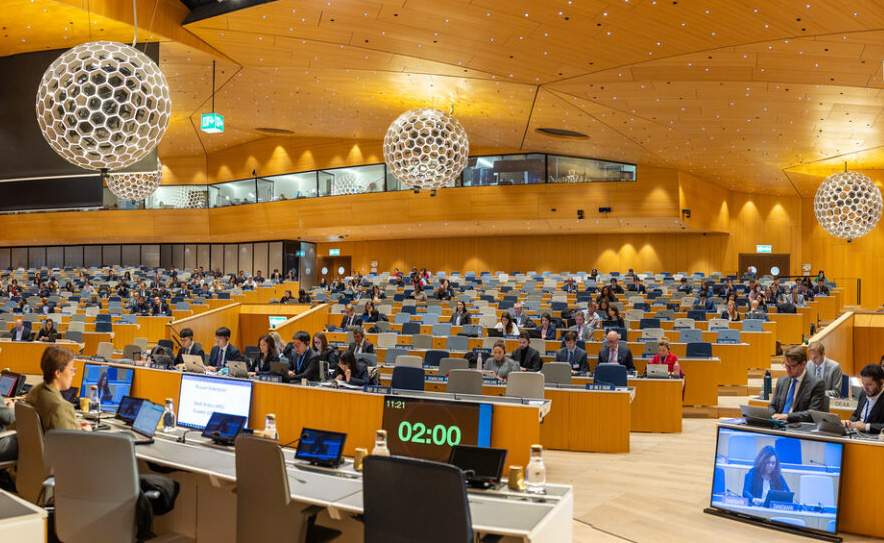
This note provides background information, links to recently published research and analysis, and descriptions of the issues in the agenda for the 48th meeting of the World Intellectual Property Organization’s Standing Committee on Copyright and Related Rights, May 18-22, 2026. To view this document as a PDF for downloading and printing, click here. The Standing Committee on Copyright and Related Rights (SCCR) has long focused on two long-standing agenda items: the Treaty for the Protection of Broadcast Organizations (since 1998) and Limitations and Exceptions for libraries, archives, museums, education, research, and persons with disabilities (since 2004, SCCR/12/3). The SCCR has also been considering various initiatives around copyright in the digital environment since its inception in 1998. Several other matters have been introduced to the agenda over time, including consideration of resale royalty rights for artwork, the rights of theatre directors, and “public lending rights” — which refer to charging libraries for lending public copies of copyrighted works. I. Protection of Broadcast Organizations A. Background B. Current Issues II. Limitations and Exceptions A. Background B. Current issues III. Other matters A. Copyright in the Digital Environment B. Resale Royalty Right C. Rights of Theatre Directors 10 D. Other Studies 10 I.Protection of Broadcast Organizations A. Background The negotiation of the rights of broadcasters was included on the SCCR’s agenda at its founding in 1998. It follows and extends a history of WIPO treaties on broadcasting dating to the Berne Convention’s protection of the rights of authors to their broadcasts in 1928 (Art 11bis), recognition of the rights of broadcast organizations to control uses of wireless broadcasts in the Rome Convention of 1961, and recognition of duties of countries to control unlawful interception of satellite signals by any means in the Brussels Convention Relating to the Distribution of Programme-Carrying Signals Transmitted by Satellite (1974). The Broadcast Treaty is being drafted according to the GA Mandates of 2006 and 2007. The central question for the Broadcasting Treaty, in line with the 2007 General Assembly Mandate, is whether there is sufficient “agreement on objectives, specific scope and object of protection” to warrant a recommendation for a diplomatic conference. (WO/GA/34/16). The 2006 GA mandated that the Broadcasting Treaty be “confined to the protection of broadcasting and cablecasting organizations in the traditional sense” and “based on a signal-based approach” (WO/GA/33/10, para 107, 2006). B. Current Issues The changes in the latest draft are minimal. The SCCR 45 Chair’s Summary described the general zone of consensus on the committee on its objectives, scope, and object of protection: “[w]ith respect to objectives, there is common understanding … that the treaty should be narrowly focused on signal piracy, should not extend to any post-fixation activities and that it should provide member states with flexibility to implement obligations through adequate and effective legal means” and “that the object of protection (subject-matter) of the treaty is related to programme-carrying signals linked to linear transmission”. Some of the provisions in the Chair’s draft appear to extend beyond the bounds of the consensus described in SCCR 45 and in the GA mandates from 2006 and 2007. Some of the major issues include: Are fixation and stored programs rights “signal-based”? The GA mandates require that the Broadcast Treaty follow a “signal based approach.” The Rome Convention uses a “rights-based” approach — i.e., giving broadcasters exclusive rights such as transmission and fixation. The Brussels Convention follows a “signal-based” approach, requiring prevention of signal theft by any regulatory means, without requiring or promoting exclusive rights. There appears to be a consensus on the Committee that, at least in principle, the inclusion of article 10’s flexibility to use other regulatory means combined with some optional exclusive rights (arts. 6-9), in what has been called a “hybrid” approach, can meet the GA requirement that it be “signal-based.” But some countries have opposed articles 7 (fixation) and 8 (stored programs) as being beyond the GA’s mandates.            a. Fixation (Art. 7) Extending the treaty to a right of fixation (Art. 7) essentially means that a user would have to get permission from a broadcaster to make a copy of broadcast content, even if that content was lawfully received (e.g. by a subscriber). That could enable broadcasters to charge subscribers extra for the right to record content, even for uses that copyright law normally permits. For example, a broadcaster may be enabled to demand additional license fees to use private recording devices to enjoy content at a different time or on a different device. Or broadcasters could require licenses to make recordings for any use not included in limitations and exceptions, such as recordings for educational, research, or preservation uses by cultural institutions.           b. Stored Programs (Art. 8) Extending protections to uses of stored programs could enable broadcasters to exclude uses of third-party recording devices and thereby obtain market power for such services. The right to record broadcast material for personal time or device shifting dates to the introduction of video cassette recorders in the 1970s. There are often markets for third party digital recording devices for broadcast material, such as the TIVO device that was popular in the US for many years. Some countries may want to authorize more sophisticated third-party recording, such as the system that was held in the US to violate broadcaster rights in American Broadcasting Cos., Inc. v. Aereo, Inc., 573 U.S. 431 (2014), which ruled that Aereo’s service—which allowed subscribers to view live, over-the-air television broadcasts over the internet—violated copyright laws.      2. Should limitations and exceptions apply to all uses permitted by copyright? Public interest groups have frequently opined that the limitations and exceptions to any broadcasting organization’s right should extend at least to all uses permitted by copyright, for example, by changing the use of “may” to “shall” throughout Article 11. Otherwise, a public interest user may have to clear broadcast rights even for a use permitted by copyright.      3. Are internet streaming companies “traditional” broadcasting? The GA mandates require
Artificial Intelligence, Blog

The Moratorium the AI Industry Cannot Afford to Lose

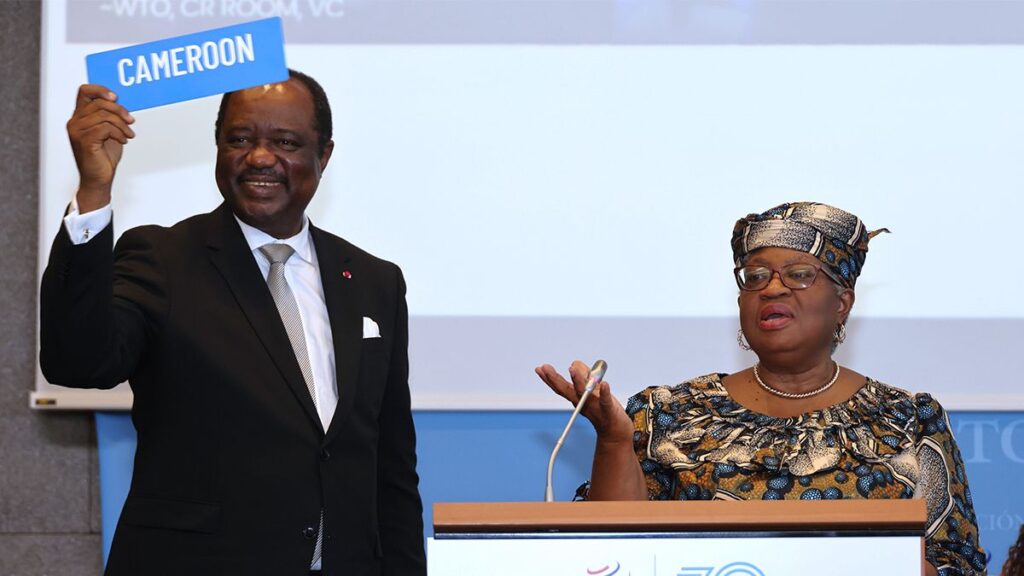
The WTO’s 14th Ministerial Conference (MC14) starts in Yaoundé, Cameroon, next week with a packed agenda and real stakes. Buried in the long list of negotiations is a decision that will have a significant impact beyond trade: whether to renew the moratorium on non-violation complaints under the TRIPS Agreement. The outcome will help determine whether the TRIPS flexibilities and exceptions, particularly copyright exceptions, which have recently become the backbone of the AI economy, can be challenged at the WTO. Two Moratoriums, One Bargain Since 1998, WTO members have supported a temporary moratorium on customs duties on electronic transmissions, including software downloads, streamed content, and digital services. That moratorium has been extended at every Ministerial Conference since. It is up for renewal again at MC14, where the United States (US) is pushing to make it permanent. The moratorium originated at the 1998 WTO Ministerial in Geneva, where members adopted a Work Program on E-commerce and committed to “continue their current practice of not imposing customs duties on electronic transmissions” (WTO 1998). Critically, the term “electronic transmissions” was never defined. That ambiguity allowed the scope of the moratorium to expand alongside the digital economy, covering an ever-wider range of digital content and services without any fresh multilateral agreement. Since then, the US has been embedding the moratorium in its bilateral free trade agreements. The US-Jordan FTA in 2000 was the first agreement to include a binding commitment not to impose customs duties on electronic transmissions. Recent agreements on reciprocal trade (ARTs) go further and require countries to support multilateral adoption of a permanent moratorium on customs duties on electronic transmissions at the WTO. All these efforts build a web of bilateral obligations that formalize the current push for a permanent multilateral moratorium at MC14. Less discussed but just as consequential is a second moratorium: the freeze on non-violation and situation complaints under the TRIPS Agreement. The moratorium on the TRIPS non-violation and situation complaints (NVC) has also been extended at each Ministerial Conference since 1995.  Under TRIPS Article 64, a WTO member can file a non-violation complaint even when no TRIPS rule has been broken, claiming only that expected benefits have been “nullified or impaired” by another member’s measures. Non-violation claims create a significant IP weapon: they mean that a country’s copyright exceptions, fair use, limitations for research and education, patentability requirements, and compulsory licenses could, in principle, be challenged at the WTO not for violating TRIPS but for frustrating the commercial expectations of foreign rightsholders.  Any TRIPS measure that allegedly nullifies or impairs benefits under TRIPS may, under certain conditions, be challenged through a non-violation complaint (e.g., on the theory that it frustrates a member’s legitimate expectations). In principle, this creates a pathway to challenge a wide range of legitimate public-interest policies that affect rightsholders. Such policies could include, among others, rules on patentability, compulsory licensing, and copyright limitations and exceptions, including the US fair use doctrine. US copyright law includes a variety of specific exceptions, but fair use is the oldest and the most broadly applicable of all US exceptions to copyright infringement. As IP scholar Frederick Abbott warned as early as 2003, “non-violation causes of action could be used to threaten developing Members’ use of flexibilities inherent in the TRIPS Agreement and intellectual property law more generally. Thus, for example, Members that adopt relatively generous fair use rules in the fields of copyright or trademark might find that they are claimed against for depriving another.”  The two moratoriums have been traded as a package. Developing countries seeking the TRIPS NVC moratorium, which protects domestic policy space in health, access to knowledge, education, and technology transfer, have had to support the e-commerce moratorium, which benefits US digital platforms. Each Ministerial Conference is, in effect, another round of that exchange. If the e-commerce moratorium becomes permanent at MC14, as the US proposes, the key question is what developing countries receive in return, particularly on the TRIPS NVC side. Significance of Copyright Exceptions Many key internet functions rely on copyright limitations and exceptions. Search engines cache and index content without negotiating individual licensing agreements; search previews display short snippets; CDNs buffer and transmit protected works; cloud services store user-uploaded copyrighted files.  According to the CCIA’s 2025 report, fair use industries now account for 18 percent of US GDP, $4.9 trillion in value added, and $10.2 trillion in revenues in 2023, employing one in seven American workers. Within that broader figure, AI-related fair use industries alone generated $1.7 trillion in revenues in 2023, up 78 percent since 2017. The AI industry has added a new dimension. Training large language models requires access to vast quantities of text, books, articles, web pages, and code repositories. Much of that access has been broadly justified under fair use, which is transformative and serves a new purpose. In that sense, AI companies and the broader data economy are the newest dependents on copyright exceptions. If those limitations and exceptions can be challenged through non-violation complaints at the WTO, bypassing the question of whether they infringe TRIPS, the legal foundation for AI training could become globally contestable.  The Buenos Aires Lesson At the Buenos Aires Ministerial Conference in December 2017, during Donald Trump’s first term, the renewal of both moratoria on the e-commerce and TRIPS NVC was uncertain. Both moratoria were eventually extended. That Buenos Aires episode revealed, or at least made visible, that the fair use and safe harbor exceptions underpinning internet commerce were potentially vulnerable to non-violation challenges. There was a growing awareness among US tech industry stakeholders of how much the TRIPS NVC moratorium mattered to their legal operating environment. The two moratoriums were treated as a package. That understanding should be stronger today. AI companies are actively navigating copyright litigation in domestic courts, whose outcomes are still unresolved. Exposure via non-violation complaints at the WTO would add a second front. What was at stake in 2017 is now more visible and more significant. What’s Next The argument is pretty straightforward. If the US

Blog

SCT: Background, next meeting and key issues to be considered

WIPO STANDING COMMITTEE ON THE LAW OF TRADEMARKS, INDUSTRIAL DESIGNS AND GEOGRAPHICAL INDICATIONS (SCT) Background According to WIPO, “the SCT was created in 1998 to serve as a forum to discuss issues, facilitate coordination and provide guidance on the progressive development of international law on trademarks, industrial designs and geographical indications, including the harmonization of national laws and procedures”. The scope of the Committee’s work includes discussions on trademark protection, including issues related to the use of country names and their treatment in digital environments such as the domain name system. It also addresses questions related to industrial designs, including emerging forms of design such as graphical user interfaces, icons, and typefaces. In the field of geographical indications, the SCT considers developments related to existing systems (e.g. the Lisbon System) and their broader implications. In addition, the Committee engages in discussions related to technical assistance, including support provided to Member States in strengthening institutional capacities. Its work also reflects broader considerations related to the balance between the interests of right holders and public policy objectives, including development, access, and the use of flexibilities. Next meeting (Forty-ninth session) Date: March 30 to April 2, 2026 Website: https://www.wipo.int/meetings/en/details.jsp?meeting_id=89768  Draft Agenda (SCT/49/1 PROV.3) Key Issues  References:

Blog, WIPO

ACE: Background, next meeting and key issues to be considered

ADVISORY COMMITTEE ON ENFORCEMENT (ACE) Background The Advisory Committee on Enforcement (ACE) was established by the WIPO General Assemblies in 2002 with a mandate focused on technical assistance and coordination in the field of intellectual property enforcement. Its mandate expressly excludes norm-setting activities. The Committee’s work centers on cooperation with public and private actors, the exchange of information, the promotion of awareness, and the organization of training activities at national and regional levels. “Within the framework of recommendation 45 of the WIPO Development Agenda, the ACE focuses on: coordinating with public and private organizations to combat counterfeiting and piracy; public education; assistance; coordination to undertake national and regional training programs for all relevant stakeholders and; exchange of information on enforcement issues.”  Next meeting (Eighteenth session) Date: June 2 to June 4, 2026 Website: https://www.wipo.int/meetings/en/details.jsp?meeting_id=90608  Draft Agenda (WIPO/ACE/18/1 PROV.) Key Issues The ACE agenda includes issues such as the following:  References:

Blog, Traditional Knowledge

IGC: Background, next meeting and key issues to be considered

INTERGOVERNMENTAL COMMITTEE ON INTELLECTUAL PROPERTY AND GENETIC RESOURCES, TRADITIONAL KNOWLEDGE AND FOLKLORE (IGC) Background The IGC is an ad hoc body with a renewable two-year mandate. Since its establishment in 2000, the IGC has worked towards international legal instrument(s) ensuring balanced and effective protection of genetic resources (GRs), traditional knowledge (TK) and traditional cultural expressions (TCEs). In 2024, the IGC led the adoption of the WIPO Treaty on Intellectual Property, Genetic Resources and Associated Traditional Knowledge (GRATK treaty), which establishes a mandatory disclosure requirement in patent applications concerning the origin or source of genetic resources and associated traditional knowledge. It will enter into force three months after fifteen eligible ratifications or accessions.  Following this outcome, the IGC continues text-based negotiations on international legal instrument(s) for the protection of TK and TCEs, primarily based on documents WIPO/GRTKF/IC/49/4 and WIPO/GRTKF/IC/49/5. Developing Countries, Like-Minded (African Group, Asia-Pacific Group, GRULAC, Pacific Islands Group) support a legally binding international instrument(s) on TK and TCEs, advocate minimum binding elements applicable to all Parties, call for a diplomatic conference by 2027, emphasize the continued integration of GR issues to support GRATK ratification and implementation, and encourage ratification of the GRATK Treaty to deliver tangible benefits to IPLCs.  Developed countries (Group B, European Union, CEBS Group, United States, Japan, Switzerland, Republic of Korea) prefer further dialogue and evidence-based exchanges, support non-binding, measures-based outcomes with multiple national options, seek to preserve broad policy space and limit normative scope, favor non-normative treatment of GR issues, do not support committing to a timeline for a diplomatic conference. Next meeting (Fifty-second session) Date: March 4 to March 13, 2026 Website: https://www.wipo.int/meetings/en/details.jsp?meeting_id=89810  Draft Agenda (WIPO/GRTKF/IC/52/1 PROV.): Key issues to be considered:  Negotiations continue to address, inter alia: References:

Blog

IP Meets AI: Disney’s Deal with OpenAI

Originally posted at Kluwer Copyright Blog and Andrés Izquierdo Lawyers Generative AI has triggered a wave of legal uncertainty in copyright law, with over 70 lawsuits worldwide challenging the unlicensed use of creative works in AI training. The recent deal betweenDisney and OpenAI could signal a turning point. Rather than fight in courts, Disney has licensed over 200 of its most valuable characters to OpenAI’s Sora platform in exchange for equity, transforming litigation into a possible strategic alliance. But this isn’t just a licensing play; it could suggest a new model for resolving the AI–IP standoff: collaborative frameworks where rights holders and tech companies co-design value-sharing mechanisms, governance standards, and licensing architectures for the AI era. What’s in the Deal? At its core, the agreement has several pillars: ●     A three-year licensing agreement allowing OpenAI’s Sora app to include more than 200 characters from Disney, Pixar, Marvel, and Star Wars in user-generated videos and images. ●     Integration of selected fan-generated AI content into Disney+, marking a rare crossover from AI-created works into a mainstream entertainment platform. ●     A $1 billion equity investment, plus stock warrants allowing Disney to increase its stake if OpenAI’s valuation grows, signaling a financial alignment between creative IP holders and AI platforms. ●     Internal deployment of OpenAI tools across Disney’s operations, spanning content workflows, product development, and audience engagement initiatives. Together, these pillars bring a new proposal for how intellectual property can operate within the AI economy. Notably, they sidestep the legal ambiguities around fair use and training data by using private contracts to define new rules of engagement. From Litigation to Licensing: A New IP Market Architecture The timing of this deal is no coincidence. Courts in the U.S., Europe, and Asia are grappling with lawsuits over whether AI training on copyrighted works constitutes infringement. The outcomes remain uncertain, and rights holders are increasingly anxious about how generative AI models extract and remix cultural capital without consent or compensation. Rather than waiting for legislative reform or judicial clarity, Disney and OpenAI are designing their own legal infrastructure. As explored in my earlier blog post, AI is testing the boundaries of copyright law, pushing stakeholders to negotiate new frameworks where innovation and rights protection can co-exist. This is part of a broader shift in the digital economy: “private ordering” through contracts and platform governance is stepping in where statutory law has lagged. The Disney–OpenAI deal effectively preempts the courtroom by creating a market-based system where IP access is negotiated, compensated, and controlled. However, this model is not without its critics. Private contracts, while expedient, often privilege large players with bargaining power, leaving independent creators and smaller rights holders with little leverage or visibility. These agreements do not necessarily resolve systemic questions about AI training data, derivative works, or fair remuneration across jurisdictions. Moreover, private licensing frameworks could entrench power asymmetries, replicating past inequities under the guise of innovation. It is also important to consider that licensing is not the only path forward. Regulatory reform, collective licensing regimes, or technical solutions like metadata tagging and rights registries could offer inclusive and transparent alternatives. As the legal terrain continues to evolve, a mix of models – public, private, and hybrid – may be necessary to safeguard rights while fostering innovation. The Creators’ Dilemma: Value, Labor, and Legal Gaps Not everyone is celebrating. The Writers Guild of America East has voiced concerns about how such licensing deals may sideline human creators and devalue creative labor. As the Guild stated, companies like OpenAI have “stolen vast libraries of works owned by the studios and created by WGA members and Hollywood labor to train their artificial intelligence systems,” raising urgent questions about creative compensation and control. While Disney’s structured licensing may offer legal clarity, it doesn’t resolve broader questions about authorship, attribution, or the economic displacement caused by generative AI. This highlights a deeper challenge: as private deals could become the new norm, creators operating outside major ecosystems may be left with limited bargaining power and few protections. Without systemic legal frameworks, the benefits of AI monetization could remain concentrated among tech giants and legacy IP holders. The emergence of a new class of synthetic media creators, trained on decades of human-generated content, also raises fundamental questions: Who gets to participate in this new economy? Who sets the terms? And what happens to the economic and cultural value of original works in the process? Why Equity Matters: From Fees to Future Value One of the most intriguing features of the deal, as reported by Bloomberg, is its financial structure. Disney opted not to receive traditional licensing fees upfront. Instead, most of the compensation is structured as  tied to OpenAI’s performance. This reflects a shift in how IP value is conceived in the age of AI. Rather than monetizing past works through one-time fees, rights holders like Disney are now betting on the future value of the platforms that use their content. Equity-based compensation aligns incentives between rights owners and tech companies, offering a shared stake in the success of AI-powered media ecosystems. Yet, this too raises questions. Equity stakes are normally inaccessible to smaller creators or rights holders, and they introduce speculative risk. As a model, it could reward institutional players while excluding those without the resources, the capacity, or the legal infrastructure to engage on such terms. What This Means for the Future of Media Law The Disney–OpenAI agreement could reshape how IP is governed in the AI era: ●     It may accelerate a shift from rights enforcement to platform-based licensing models. ●     It establishes financial structures where rights holders participate in AI platform growth. ●     It signals that legal innovation can emerge from private strategy, not just public regulation. But it also exposes the limitations of relying solely on private arrangements to govern public cultural and legal challenges. Lawmakers, courts, and multilateral bodies must still grapple with the foundational questions that private deals sidestep. Transparency, equity, and universal access remain unresolved. For legal professionals, the message is clear: the future of IP will be negotiated in boardrooms as much as in courtrooms. As generative AI

Blog, WIPO

Time for an IP Reset for Health, Education, Creativity and TK?

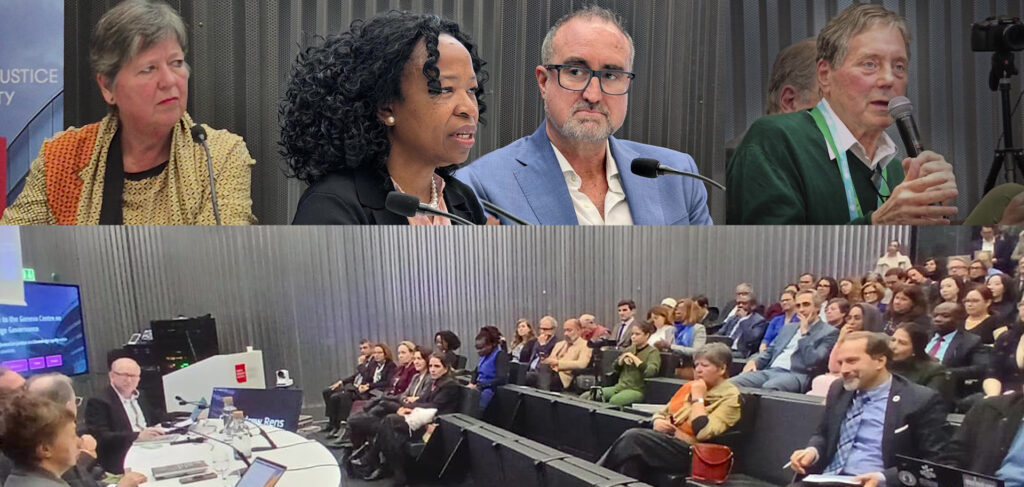
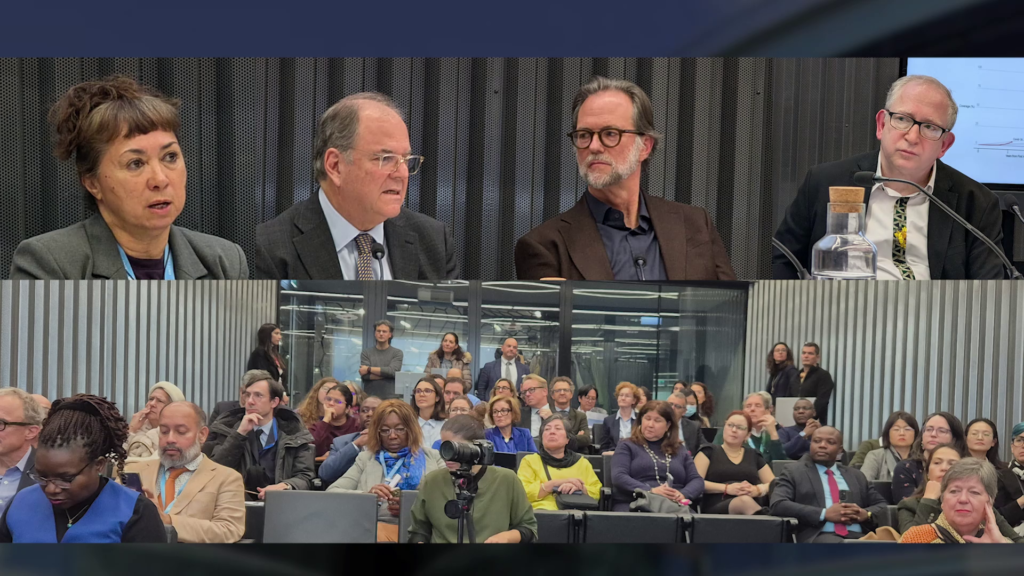
It’s time to put people back into the Intellectual Property system. Currently IP tends to reproduce inequality. IP should support public goods such as health and education. We need to address substitution of creators and markets by AI and we should promote solutions like Public AI to protect research and cultural diversity. The profits earned through the monopoly power of IP should be ‘de-linked’ from the incentive to invest in R&D or creativity, especially in health. Most of all, we need accountability back in the system. These were a few of the recommendations offered by a high-level panel of international professors, top government representatives and practitioners at the recent launch of the Centre on Knowledge Governance at the Geneva Graduate Institute on 3 Dec 2025. The discussion covered many of the topical issues currently being negotiated at the World Intellectual Property Organization (WIPO) and the World Health Organisation (WHO). Disclosure of Traditional Knowledge Former WIPO senior director Wend Wendland talked about his new book which details the long journey to adopt a Treaty on Genetic Resources and Associated Traditional Knowledge (TK), finally passed in 2024 and which requires the disclosure of TK in patent applications, a rare win for marginalised people in the formal IP system. Valmaine Toki, a Maori rights advocate, praised the treaty but said it will remain an imperfect victory until indigenous people have a full seat at the table in fora like WIPO to ensure full benefit sharing in the exploitation of their knowledge.  Remuneration Guilherme Patriota, Brazil’s Ambassador to the WTO said that creativity and innovation, especially in the age of AI, should not be a ‘winner takes all’ scenario skewed towards the interests of large corporations.  The creator of Brazil has a huge music industry, very popular, also very valuable in many ways like many other countries of the South. Actually, it’s kind of a wealth of the South. Nigeria has a huge film and music industry as you do in South Africa. What’s going to happen to that? Is that all going to be fed for free into systems for large language models and AI and they will start to replicate similar types of music? I think individuals should have the rights of remuneration for their individual work and contribution. So that’s what we’re looking for. Make it more human, make the system more human. Harvard Law Professor Ruth Okediji argued that the failure to reward creators is a problem throughout the IP system: The innovators behind the COVID-19 vaccine are not the ones getting the royalties. The employees in the big intermediaries are not the ones getting the remuneration. It’s not just indigenous communities. It’s not just women. It’s not just small and medium enterprises. The entire ecosystem is structured around private arrangements that make equitable dissemination [of benefits] difficult… AI is bringing us to this moment of confrontation in more explicit ways. Let’s remember that it’s not just the scraping of music or the scraping of data. There are labourers in developing countries who are painstakingly, for very little money, involved in this [production of AI models]. There are environmental costs of these large language models and those costs will be borne disproportionately.  So I think to echo something Ambassador Patriota said, this [inequality] is in the DNA of the system. Access to Medicines Participants also talked about the impact of IP monopolies on access, especially to public goods. Leading health advocate Ellen ‘t Hoen expressed disappointment that the IP lessons learnt by the Access to Medicines movement which fought successfully for affordable AIDS medicines in the 1990s were not applied during the Covid19 pandemic.  The vaccines, the COVID-19 vaccines were largely developed with fast, vast amounts of public financing. …That’s exactly what you want. If a crisis hits like that, you want governments to act and spend money in order to solve it. But what they failed to do was attach conditions to that financing. Those conditions could have, for example, been licensing  know-how through the Coronavirus Treatment Acceleration Program (CTAP) or the Medicines Patent Pool. That did not happen. So the IP was quite strong, and the companies at the end of the day became the ones who decided where the vaccines would go, and the vaccines went to the highest bidders. There is the famous case of Canada buying three times the size of its population, while about five people were vaccinated in sub-Saharan Africa.  James Love of Knowledge Ecology International added the problem of global scale: I think we have to really think hard about how you produce works, produce inventions, produce products as public goods in a world where markets are global. They’re not just national. Governments can sort of do public goods at the national level. They have really been bad at doing it at the global level. And I think that proposals like the idea of de-linking the incentive for drug development from the price of the drug, or the idea of a WTO agreement on the supply of public goods, those things are really, really important today. Limitations and Exceptions Ruth Okediji described Limitations and Exceptions to Copyright in a similar vein: There are public goods for which limitations and exceptions are critical. Education would be an example. Every country needs limitations and exceptions that address what happens in the classroom. So I’d say limitations and exceptions for education are super important. We have limitations, for example, for innovation purposes, reverse engineering, decompilations, when it comes to software. This is important in order to both promote interoperability but also to understand what’s behind the hood when you’re looking at a particular technical invention. So I think identifying the category of limitations and exceptions is important and then discerning whether that is a category that at the multilateral level can facilitate consensus because it is the kind of knowledge good for which all countries have a common concern. Archivists are another example. The role of libraries, another example.  Okediji went on to characterise

Blog, WIPO, WIPO-SCCR

WIPO SCCR 47 Ends with Some Progress After Another Late Night

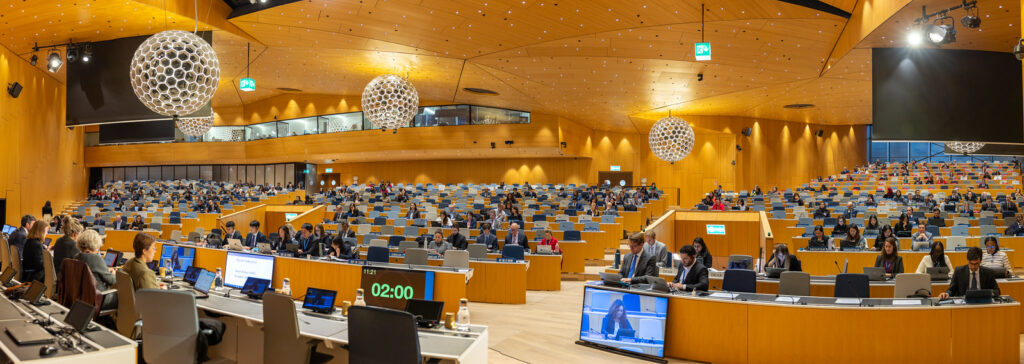
The World Intellectual Property Organization’s Standing Committee on Copyright and Related Rights negotiated its conclusions into the early morning hours of December 6 over the conclusions on a packed agenda. The meeting agreed to identify a series of specific articles of the Treaty on the Protection of Broadcast Organizations that lack consensus, to delay until next meeting the decision on how to begin text based negotiations on three proposals for work on an instrument on limitations and exceptions, and to begin work on studies of remuneration of audiovisual authors and on copyright and training of artificial intelligence tools. This note describes the major conclusions and positions of member states at the meeting. Below we also publish an edited transcript of the SCCR 47 public sessions.  Treaty for the Protection of Broadcast Organizations The Chair released a new draft Treaty for the Protection of Broadcasting Organizations with minor changes from the previous draft. After many sessions of the SCCR when it appeared that a conclusion of the broadcast Treaty might be near, this round ended with conclusion that many of the draft treaty’s provisions are far from reaching consensus. The Chair’s summary, in a break with those of the recent past, contained a detailed discussion of divergences that remain: 8. Regarding the first set of articles (articles 1, 9, 12, 13, 14, 16, 17), no concerns were raised about their current wording.  The second set of articles (articles 3, 4, 6, 10) received support in principle, although a few technical adjustments are still required either in the provisions or the explanatory notes.  With respect to the third set of articles, further in-depth discussions are needed in order to overcome the remaining differences, particularly on the topics of (i) rights contained in articles 7, 8 and the respective definitions (article 2), (ii) exceptions and limitations (article 11) and (iii) the functioning of the national treatment and reciprocity principles (article 5 and the interlink between articles 6, 7, 8, 9 and articles 10 and 15).  In plenary statements, the United States and the members of the African Group explicitly opposed moving the current Chair’s draft of the treaty to a diplomatic conference.  The African Group has long supported a narrow broadcast treaty and has repeatedly expressed concerns about potential unintended effects of a broader treaty on public interest uses and on competitive markets. At this SCCR, the Group made its most specific objections to particular provisions of the draft.  The African group stated its support for the conclusions of the Chair’s summary of SCCR 45, “notably that the treaty should be narrowly focused on signal piracy, should not extend to post-fixation activities, should provide Member States with flexibility to implement obligations through adequate and effective legal means and that the object of protection relates to program carrying signals linked to linear transmissions.” It criticized the current draft of the Treaty as veering outside of this zone of consensus. It specifically objected to: The Group identified several questions it requested the facilitators and proponents of the treaty to address, including: The African Group concluded that, “given the lack of consensus on numerous provisions, the African Group is of the view that the present text is not ready for a referral to a Diplomatic Conference.” It further restated its position “that the broadcasting treaty and the instrument on limitation and exceptions should progress together with a view to finalizing both instruments concurrently.” The United States largely repeated concerns about the scope of the draft treaty that it has made in previous SCCR and General Assembly meetings. It expressed disappointment that Articles 7 and 8, on fixation and post-fixation rights over stored programs, were retained in this draft despite its objections to these provisions in earlier meetings.  The EU, the primary demander of the Treaty, expressed some flexibility in confining the draft to conform to concerns raised by other members and recognized that “further technical clarifications are needed” on the present draft. The EU restated its support for a “future proof” treaty in which “retransmission by computer networks of broadcasting organization should be granted meaningful protection.” But it asserted some flexibility on this matter, stating that, “in order to achieve a compromise,” it is “ready to consider” the current option in the text for countries to opt out of covering broadcasting organizations that transmit exclusively via computer networks through a reservation. The EU did not, however, signal support for the narrowing of rights to exclude coverage of stored programs opposed by the United States and the Africa Group. Some other countries, including Russia, Japan, and Canada, noted the minimal changes in the current draft and urged that it progress toward the available consensus that could support a narrower treaty. India specifically called for consideration of “the option of incorporating mandatory limitations and exceptions.”  Brazil asserted that it was ready follow a consensus for the convening of a Diplomatic Conference based on the present draft, but asserted that “in case consensus is not possible by the end of this session, we propose to temporarily remove the topic from the agenda to enable consultations among interested parties, bringing it back to the Committee after sufficient convergence is identified.” Following plenary comments, the discussions of the Treaty moved into informal sessions in which, for the first time in recent memory, observers were not permitted to listen to the deliberations.  Limitations and Exceptions The limitations and exceptions agenda saw the introduction of three new texts. Responding to SCCR 46’s conclusion that the Chair “will prepare a document with concrete suggestions … for the implementation of the Work Program” on limitations and exceptions, the Chair published a Framework of Work Towards an Appropriate International Legal Instrument or Instruments on Limitations and Exceptions. The African Group published a Draft Instrument on Limitations and Exceptions for Libraries, Archives, Museums, Education and Research Institutions and People with Disabilities. The United States, during the SCCR meeting, published Updated Version of the Document “Objectives and Principles for Exceptions and Limitations for Libraries And Archives” and

Blog, Centre News

Centre Launches with Top Thinkers; Video available.

At a packed event at the Geneva Graduate Institute on 3rd December 2025, the Centre on Knowledge Governance held its official launch. The launch featured top thinkers and high level government representatives, with a focus on the future of the Intellectual Property system. The full video of the event is now available to view online. After an introduction by Centre Director Sean Flynn, the event featured the launch of a new book by Wend Wendland, entitled The Journey to the WIPO Treaty on Genetic Resources and Associated Traditional Knowledge. Joining Professor Wendland were His Excellency Ambassador Patriota of Brazil and Maori rights activist, Valmaine Toki. A second panel discussed the future of the IP system, with high level contributions by Harvard Professor Ruth Okediji and Medicines advocate Ellen ‘t Hoen. The event was moderated by Ben Cashdan, a filmmaker from South Africa and former advisor in the office of President Nelson Mandela.

Blog, Centre News

Centre Announces New Advisory Board, Fellows and Faculty Advisors

At the launch of the Centre on 3rd December 2025 at the Geneva Graduate Institute, Centre Director Sean Flynn announced new appointments to the advisory bodies of the Centre, including prominent high profile international scholars and thinkers. Advisory Board Joining the top level advisory board are: James Love, Director of Knowledge Ecology International. He advises UN agencies, national governments, international and regional intergovernmental organizations and public health NGOs, and is the author of a number of articles and monographs on innovation and intellectual property rights. Ellen ‘t Hoen, a lawyer and public health advocate. From 1999 until 2009 she was the director of policy for Médecins sans Frontières’ Campaign for Access to Essential Medicines. In 2009 she joined UNITAID in Geneva to set up the Medicines Patent Pool (MPP). She was the MPP’s first executive director until 2012. From 2014 to 2025 she served as the Director of Medicines Law & Policy. Carlos Correa, the Executive Director of the South Centre. He began his term as South Centre Executive Director on 1 July 2018. Prior to this, he was the Special Advisor on Trade and Intellectual Property of the South Centre. Dr. Correa is a renowned international authority on intellectual property and technology issues. Fellows Our inaugural senior fellows are: Wend Wendland, a lawyer from South Africa who has more than 30 years’ experience in intellectual property, in both the private and public sectors. As a Director of the World Intellectual Property Organization (WIPO) for many years until June 2025, he devoted himself to multilateral norm-setting and capacity-building. Wendland is the author of The Journey to the WIPO Treaty on Genetic Resources and Associated Traditional Knowledge Maja Bogataj Jančič, the founder and head of the Intellectual Property Institute (IPI), a private research, training and consulting institution based in Ljubljana, Slovenia.Maja is also the founder and head of the Open Data and Intellectual Property Institute ODIPI. Her recent work focuses on open science, open data, data governance and artificial intelligence, as well as open science issues and the legal framework of copyright and data for research and science. Affiliated Faculty In addition to the Advisory Board and Senior Fellows, the Centre has announced affiliated faculty members from the Geneva Graduate Institute, as follows: Suerie Moon, Co-Director, Global Health Centre. Moon combines academically rigorous research and analysis with policy relevance and impact. Her theoretical contributions to the field include conceptualizing the global health system, defining the functions the system must perform to adequately protect public health, global public goods for health, and identifying the types of governance gaps and power disparities that contribute to health inequity.  David Rodogno, Professor, International History and Politics, Head of Interdisciplinary Programmes, Academic Advisor, Executive Certificate in Advocacy and International Public Affairs. Dr Rodogno was a Research Fellow at the London School of Economics (2002-2004), Foreign Associate Researcher at the Institut d’Histoire du Temps Présent in Paris (2004-2005), RCUK Academic Fellow at the School of History, University of St Andrews (2005-2010), and SNSF – Research Professor (2008-2011). Joost Pauwelyn, Professor of International Law at the Graduate Institute and Co-Director of the Institute’s Centre for Trade and Economic Integration (CTEI). He is also the Murase Visiting Professor of Law at Georgetown University Law Center (since 2014). Joost specializes in international economic law, in particular trade law and investment law, and its relationship to public international law. He also a leading force behind the global www.tradelab.org network of legal clinics on international economic law. Dêlidji Eric DEGILA, Professor of practice of International Relations, Interdisciplinary Programmes and Visiting Faculty in the Department of Political Science and International Relations at the Geneva Graduate Institute. He is the past Chair of the Global South Caucus, International Studies Association, ISA. His research interests range from international politics to African peace and security challenges, diplomacy, migration, and health issues in the Global South. Annabelle Littoz-Monnet, Professor of International Relations and Political Science. Before joining the Institute in 2009, Annabelle Littoz-Monnet was Assistant Professor at the Central European University, Budapest (2005-2009). She has also worked for the Socio-Legal Studies Centre at Oxford University and as a Research fellow at the Royal Institute of International Relations, Brussels (2004-2005). Neha Mishra, Assistant Professor in the international law department of the Geneva Graduate Institute. She researches international legal issues in the digital economy, focusing on international economic law, data flows/governance, and digital trade, and the interface of international law and emerging digital technologies. Carolyn Deere Birkbeck, the Founder and Executive Director of the Forum on Trade, Environment & the SDGs (TESS), housed at the Geneva Graduate Institute. TESS is dedicated to supporting the multilateral dialogue, inclusive international cooperation, and policy action necessary to align trade and trade policies with the urgent need for environmental action, sustainable development, and just transitions.  For more information about all the people at the Centre on Knowledge Governance, visit the people section of our about page.

Scroll to Top