Blog

Your blog category

Blog, WIPO GA, WIPO-SCCR

WIPO General Assembly Meeting on SCCR Expresses Consensus for Progress on Broadcast and L&E Instruments

Sean Flynn, Luca Schirru, Talia Deady The World Intellectual Property Organization (WIPO) held its General Assembly (GA) this week, including a review of the progress and recommendations of the Standing Committee on Copyright and Related Rights (SCCR). The GA affirmed its mandates to the Committee to continue working on instruments on the protection of broadcasting organizations and limitations and exceptions (L&Es) for libraries, archives, museums, education and research institutions, and for people with disabilities other than visual impairments. Analysis of the statements of regional groups and delegations shows that there is a growing consensus for conclusion of the Broadcasting Treaty under a narrowed form and for pairing it with progress toward at least an instrument on L&Es. This article summarises and analyses the statements of delegations on the SCCR’s work. A companion article provides fuller excerpts of the statements quoted here.  Context   The GA is the apex decision-making body of WIPO. Among other work, at each meeting, the Assembly reviews and affirms or alters its mandates to Standing Committees on the ongoing work. The SCCR is operating under two sets of mandates from the General Assembly.  Decisions from 2006 and 2007 instruct the Committee to seek “agreement on objectives, specific scope and object of protection” on a basic text of a treaty for the protection of broadcast organizations (WO/GA/34/16, 2007) “confined to the protection of broadcasting and cablecasting organizations in the traditional sense” and “based on a signal-based approach” (WO/GA/33/10, 2006).  A decision from 2012 instructs the Committee to work toward an “appropriate international legal instrument or instruments (whether model law, joint recommendation, treaty and/or other forms)” on uses by libraries, archives, museums, educational and research institutions, and persons with other disabilities (WO/GA/41/14). In SCCR 43, the Committee adopted a Work Program on Limitations and Exceptions (SCCR/43/8), including a process to draft “objectives, principles, and options” for instruments. SCCR agendas regularly include work on a number of other agenda items, most of which have been approved in some form by GAs for SCCR discussions, but only Broadcasting and L&Es are subject to GA mandates for the drafting of international instruments.  Broadcasting Organizations Consensus for Concluding a Treaty There continues to be a consensus within the SCCR in favor of concluding the Broadcast Treaty, with many calling for more speed in reaching a conclusion. The groups and countries that spoke in favor of concluding a Broadcasting Treaty included the Asia Pacific Group (APG), Group B, Central European and Baltic States (CEBS), Group of Latin American and Caribbean Countries (GRULAC), African Group (AG), China, European Union (EU), Colombia, Iran, Russian Federation, Mexico, United States, Japan, India, Malawi, Kenya, Saudi Arabia, Algeria, Cameroon, Botswana, France, Kazakhstan, South Africa, Algeria, and Samoa.  Several statements called for speeding progress toward the Treaty’s conclusion. France called for “the Committee to speed up in a constructive manner the work on the draft Treaty.” The Russian Federation called for the Committee “to step up work on the draft WIPO Treaty.” The African Group, Cameroon, Botswana, Kenya, and South Africa expressed concern on the slow progress of work of the SCCR on both broadcasting and L&Es.  Several speakers explicitly endorsed a Diplomatic Conference in the near term. These included both CEBS and the EU, which each mentioned their long-term support for convening of a Diplomatic Conference. China expressed a desire to reach “an agreement on substantive issues … to lay a foundation for the convening of a Diplomatic Conference.” Saudi Arabia specifically supported “holding two sessions in 2025 regarding protecting broadcasting organizations because this will bridge gaps among Member States and will pave the way in order to hold a Diplomatic Conference on this matter.” The Asia Pacific Group, however, urged “continued constructive engagement … without prejudging whether the Committee is in a position to recommend the convening of a Diplomatic Conference.”  Debate Over the Internet Provisions  The main sticking point on the Treaty has long involved the provisions that extend to Internet streaming.  The countries of the EU and CEBS, which support the Internet provisions, have supported convening a diplomatic conference on the current draft text. The EU expressed its support for a “worthwhile” Treaty “which responds to the technological realities of the 21st century.” Similarly, the CEBS group expressed support for a Treaty that “reflects the technological realities of the 21st century,” is “future-oriented,” “accommodates the challenges posed by the digital environment,” and “provides equal protection for transmissions over computer networks.” Many of the groups and countries signaled their opposition to the Internet provisions by calling for closer adherence to the 2006 and 2007 GA decisions.  The US was most explicit in its objections. It stated that the current draft text “exceeds the General Assembly mandate with its inclusion of articles that provide a new right of fixation and that protect signals used in making available to the public stored programs.” It called instead for the Treaty to be “limited to providing traditional broadcasting organizations with a single exclusive right to authorize simultaneous retransmissions to the public of their linear broadcast signals.” Referring to the terms of the 2007 GA’s prerequisites for the recommendation of a diplomatic conference, the US argued that there continue to be “significant questions and concerns … regarding the proposed instrument’s objectives, rights to be granted, and scope of protection.” Accordingly, it called for “much more work” on “these fundamental issues” to make the draft text “acceptable to all Member States.” Japan echoed the statement of the US in observing “different views among Member States on the fundamental issues” and opined that “a flexible approach is needed allowing each Member State to join the treaty while taking into account international and regional circumstances.”  The Asia Pacific Group, represented by Pakistan, recognized “the need to narrow gaps and build consensus in line with the mandate of the Committee.” Iran called for “moving the Committee closer to fulfilling the 2007 General Assembly mandate … limited to the traditional broadcasting organizations and based on a signal-based approach.” Mexico similarly called for an approach “focusing on
Blog

Tanuja Garde Appointed Director of WTO’s IP Division

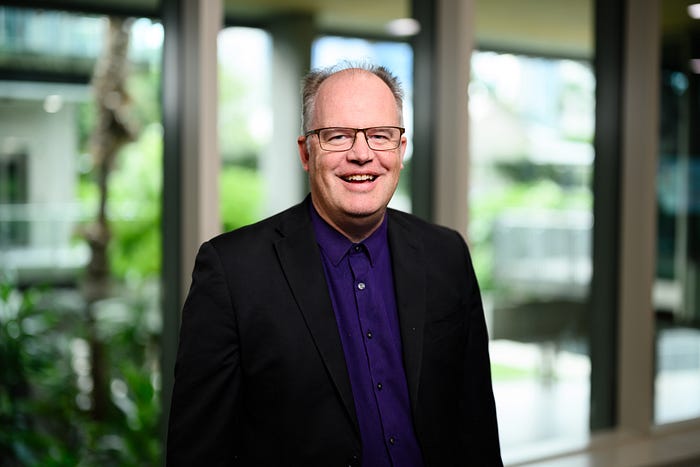
In July 2025, Tanuja Garde assumed the role of Director of the Intellectual Property, Government Procurement and Competition Division at the World Trade Organization (WTO). She holds a bachelor’s degree in Chemistry from Duke University and a Juris Doctor from the Washington University in St. Louis School of Law. Before joining the WTO, Garde was Vice President of IP and Information Governance at Boeing (2022–2025) and an advisor to the Industry Trade Advisory Committee on Intellectual Property Rights of the Office of the U.S. Trade Representative (2019–2025). According to the WTO website, the division is “responsible for the WTO’s work in trade-related intellectual property rights (TRIPS), government procurement and competition policy,” and “also maintains and develops lines of communication with other intergovernmental organizations, non-governmental organizations, intellectual property practitioners and the academic community.” Garde succeeds Antony Taubman, who directed the WTO division from 2009 to 2024. Before that, Taubman was Director of Global Intellectual Property Issues at the World Intellectual Property Organization (WIPO) (2002–2009).

Blog

Torres Strait Islander climate change decision by Fed Court at odds with UN

16 July 2025 QUT legal expert Professor Mathew Rimmer is available to speak on the yesterday’s decision: · Judge doubted negligence law appropriate vehicle to deal with climate change matters · Judge said action on climate change a political matter for Fed Govt · The judge maintained Torres Strait Islanders’ only recourse was via ‘the ballot box’.” · An appeal court could further explore comparative international developments in climate litigation. In the landmark case of Pabai Pabai v Commonwealth, Justice Michael Wigney of the Federal Court of Australia doubted whether the law of negligence was the appropriate vehicle to deal with matters of climate change. QUT legal expert Professor of Intellectual Property and Innovation Matthew Rimmer said that judge held that the Commonwealth did not owe a duty of care to Torres Strait Islanders to protect them from climate change. “Judge Wigney acknowledged that the Commonwealth’s response to the threat of climate change to the Torres Strait Islands and their traditional inhabitants has been wanting,” Professor Rimmer said. “However, Judge Wigney stressed that the question of action on the reduction of greenhouse gases was ultimately a political matter for the Federal Government. “The judge warned there could be little, if any, doubt that the Torres Strait Islands face a bleak future if urgent action is not taken. The judge maintained that the only recourse that Torres Strait Islanders have is via ‘the ballot box’.” Professor Rimmer said that the case recognised that the Torres Strait Islands had been ravaged by the impacts of climate change. “The judge also noted that climate change is having ‘a devastating impact on the traditional way of life of Torres Strait Islanders and their ability to practices Ailan Kastom, their unique and distinctive body of customs, traditions, observances and beliefs.’ “The judge doubted, though, the applicants could obtain relief — ‘in respect of their loss of fulfilment of Ailan Kastom’. Professor Rimmer said the protection of traditional knowledge, cultural heritage, and Indigenous intellectual property warranted greater consideration. “The judge showed a significant amount of judicial humility, maintaining that a single judge of the Federal Court of Australia could not change the law. “The judge did observe that the law could change through ‘the incremental development or expansion of the common law by appellate courts, or by the enactment of legislation.’ “The judge said the plaintiffs could take this case further to the Full Court of the Federal Court of Australia, and ultimately, the High Court of Australia (which has previously engaged in judicial innovation in the Mabo case).’ Professor Rimmer said an appeal could explore the consistency of the decision with comparative law and international law. “An appeal court could further explore comparative developments in climate litigation.” Professor Rimmer said yesterday’s decision was also at odds with the successful 2019 Urgenda decision in the Netherlands in which the Dutch Supreme Court held that the Dutch government had an obligation to urgently reduce greenhouse emission in line with its human rights obligations. The decision of the Federal Court of Australia in Pabai Pabai v Commonwealth could be contrasted with the decision of 2022 Torres Strait Eight case of Daniel Billy and others v Australia. Professor Rimmer said that in the Torres Strait Eight case the UN Human Rights Committee found that Australia’s failure to adequately protect Torres Strait Islander people from adverse climate impacts violated their human rights. “The Committee found that under the UN’s Covenant on Civil and Political Rights, which Australia ratified in 1980, Australia had violated their human rights, in particular their cultural rights, and rights to be free from arbitrary interferences with their private life, and family, and home,” Professor Rimmer said. Pabai v Commonwealth of Australia (No 2) [2025] FCA 796 Decision — https://www.judgments.fedcourt.gov.au/judgments/Judgments/fca/single/2025/2025fca0796 Summary — https://www.judgments.fedcourt.gov.au/judgments/Judgments/fca/single/2025/2025fca0796/summaries/2025fca0796-summary For reactions of defendants, see The Hon Chris Bowen MP, Minister for Climate Change and Energy, and the Hon Malarndirri McCarthy, Minister for Indigenous Australians, Senator for the Northern Territory, ‘Joint statement on Pabai Pabai v Commonwealth’, Australian Government, 15 July 2025https://minister.dcceew.gov.au/bowen/media-releases/joint-statement-pabai-pabai-v-commonwealth For reactions of plaintiffs, see Joseph Gunzier, ‘‘My Heart is Broken’: Climate Case Dismissed Despite Findings of Cultural Loss’, National Indigenous Times, 16 July 2025, https://nit.com.au/15-07-2025/19140/my-heart-is-broken-climate-case-dismissed-despite-findings-of-cultural-loss Niki Widdowson, ‘Torres Strait Islander climate change decision by Fed Court at odds with UN’, Media Alert, QUT,16 July 2025, https://drrimmer.medium.com/torres-strait-islander-climate-change-decision-by-fed-court-at-odds-with-un-4d1da4c805a2

Artificial Intelligence, Blog

A first look into the JURI draft report on copyright and AI

This post was originally published on COMMUNIA by Teresa Nobre and Leander Nielbock Last week we saw the first draft of the long-anticipated own-initiative report on copyright and generative artificial intelligence authored by Axel Voss for the JURI Committee (download as a PDF file). The report, which marks the third entry of the Committee’s recent push on the topic after a workshop and the release of a study in June, fits in with the ongoing discussions around Copyright and AI at the EU-level. In his draft, MEP Voss targets the legal uncertainty and perceived unfairness around the use of protected works and other subject matter for the training of generative AI systems, strongly encouraging the Commission to address the issue as soon as possible, instead of waiting for the looming review of the Copyright Directive in 2026. A good starting point for creators The draft report starts by calling the Commission to assess whether the existing EU copyright framework addresses the competitive effects associated with the use of protected works for AI training, particularly the effects of AI-generated outputs that mimic human creativity. The rapporteur recommends that such assessment shall consider fair remuneration mechanisms (paragraph 2) and that, in the meantime, the Commission shall “immediately impose a remuneration obligation on providers of general-purpose AI models and systems in respect of the novel use of content protected by copyright” (paragraph 4). Such an obligation shall be in effect “until the reforms envisaged in this report are enacted.” However, we fail to understand how such a transitory measure could be introduced without a reform of its own. Voss’s thoughts on fair remuneration also require further elaboration, but clearly the rapporteur is solely concerned about remunerating individual creators and other rightholders (paragraph 2). Considering, however, the vast amounts of public resources that are being appropriated by AI companies for the development of AI systems, remuneration mechanisms need to channel value back to the entire information ecosystem. Expanding this recommendation beyond the narrow category of rightholders seems therefore crucial. Paragraph 10 deals with the much debated issue of transparency, calling for “full, actionable transparency and source documentation by providers and deployers of general-purpose AI models and systems”, while paragraph 11 asks for an “irrebuttable presumption of use” where the full transparency obligations have not been fully complied with. Recitals O to Q clarify that full transparency shall consist “in an itemised list identifying each copyright-protected content used for training”—an approach that does not seem proportionate, realistic or practical. At this stage, a more useful approach to copyright transparency would be to go beyond the disclosure of training data, which is already dealt with in the AI Act, and recommend the introduction of public disclosure commitments on opt-out compliance. A presumption of use—which is a reasonable demand—could still kick in based on a different set of indicators. Another set of recommendations that aims at addressing the grievances of creators are found on paragraphs 6 and 9 and include the standardization of opt-outs and the creation of a centralized register for opt-outs. These measures are very much in line with COMMUNIA’s efforts to uphold the current legal framework for AI training, which relies on creators being able to exercise and enforce their opt-out rights. Two points of concern for users At the same time that it tries to uphold the current legal framework, the draft report also calls for either the introduction of a new “dedicated exception to the exclusive rights to reproduction and extraction” or for expanding the scope of Article 4 of the DSM Directive “to explicitly encompass the training of GenAI” (paragraph 7). At first glance, this recommendation may appear innocuous—redundant even, given that the AI Act already assumes that such legal provision extends to AI model providers. However, the draft report does not simply intend to clarify the current EU legal framework. On the contrary, the report claims that the training of generative AI systems is “currently not covered” by the existing TDM exceptions. This challenges the interpretation provided for in the AI Act and by multiple statements by the Commission and opens the door for discussions around the legality of current training practices, with all the consequences this entails, including for scientific research. The second point of concern for users is paragraph 13, which calls for measures to counter copyright infringement “through the production of GenAI outputs.” Throughout the stakeholder consultations on the EU AI Code of Practice, COMMUNIA was very vocal about the risks this category of measures could entail for private uses, protected speech and other fundamental freedoms. We strongly opposed the introduction of system-level measures to block output similarity, since those would effectively require the use of output filters without safeguarding users rights. We also highlighted that model-level measures targeting copyright-related overfitting could have the effect of preventing the lawful development of models supporting substantial legitimate uses of protected works. As this report evolves, it is crucial to keep this in mind and to ensure that any copyright compliance measures targeting AI outputs are accompanied by relevant safeguards that protect the rights of users of AI systems. A win for the Public Domain One of the last recommendations in the draft report concerns the legal status of AI-generated outputs. Paragraph 12 suggests that “AI-generated content should remain ineligible for copyright protection, and that the public domain status of such works be clearly determined.” While some AI-assisted expressions can qualify as copyright-protected works under EU law —most importantly when there’s sufficient human control over the output—many will not meet the standards for copyright protection. However, these outputs can still potentially be protected by related rights, since most have no threshold for protection. This calls into question whether the related rights system is fit for purpose in the age of AI: protecting non-original AI outputs with exclusive rights regardless of any underlying creative activity and in the absence of meaningful investment is certainly inadequate. We therefore support the recommendation that their public domain status be asserted in those cases. Next steps Once the draft report is officially published and presented in JURI on

Artificial Intelligence, Blog

Danish Bill Proposes Using Copyright Law to Combat Deepfakes

Recently, a Danish Bill has been making headlines by addressing issues related to deepfake through a rather uncommon approach: copyright. As stated to The Guardian, the Danish Minister of Culture, Jakob Engel-Schmidt, explained that they “are sending an unequivocal message that everybody has the right to their own body, their own voice and their own facial features, which is apparently not how the current law is protecting people against generative AI.” According to CNN, the minister believes that the “proposed law would help protect artists, public figures, and ordinary people from digital identity theft.” Items 8, 10, and 19 of the proposal include some of the most substantive changes to the law. Among other measures, Item 8 proposes adding a new § 65(a), requiring the prior consent of performers and performing artists to digitally generate imitations of them and make these available to the public, establishing protection for a term of 50 years after their death. Item 10 introduces a new § 73(a), focusing on “realistic digitally generated imitations of a natural person’s personal, physical characteristics,” requiring prior consent from the person being imitated before such imitations can be made available to the public. This exclusive right would also last for 50 years after the death of the imitated person and would not apply to uses such as caricature, satire, parody, pastiche, criticism, or similar purposes. It could be argued that this approach is uncommon because several countries, including those in the European Union, already have laws regulating personality rights and, more specifically, personal data. Copyright is known for regulating the use of creative expressions of the human mind, not the image, voice, or likeness of a person when considered individually, i.e., outside the context of an artistic performance. According to CNN “Engel-Schmidt says he has secured cross-party support for the bill, and he believes it will be passed this fall.”  A machine-translated version of the Proposal is below:  Notes:

Blog, WIPO-SCCR

User Rights Network on SCCR Calls for Progress

The following statement was delivered by Professor Sean Flynn on behalf of the Global Expert Network on Copyright User Rights at the World Intellectual Property Organization General Assembly meeting on the Standing Committee on Copyright and Related Rights.  …. I speak on behalf of the User Rights Network of copyright academics around the World. I found Ms Forbin’s opening statement to be quite striking.  The Broadcast and the Limitations and Exceptions topics can indeed be traced back over a quarter of a century. Both date back to the 1996 Internet Treaties where the broadcast issue was removed and an agreed statement adopted calling for adaptation of exceptions for the digital environment. Both issues were on the initial agenda of the SCCR that was created by the GA in 1998.  Of course the increased participation in the Committee and the lack of speedy work is not really a paradox but a reflection of the importance and contested nature of some of the issues.  But as an outside observer, I would say that conclusions of both agenda items are fairly clear and achievable.  On L&E, the GA Decision of 2012 statement sets the goal. Which is not only thematic events and tool kits as some observers here called for. The 2012 General Assembly mandated “work towards an appropriate international legal instrument or instruments” on limitations and exceptions. (WO/GA/41/14). Instruments. Not just events and guides.  We commend the SCCR’s adoption of the Work Program in SCCR 43 to progress toward the mandate. That Work Program contains innovative modalities of the kind Ms Forbin may have been referring to, including intercessional work.  Importantly, the Work Program does not prejudge the nature of the instrument. Today, I heard the EU and the US agree to work on at least soft law instruments on L&Es. I have heard all education and research stakeholders state that such soft laws would be helpful. So that seems to be a landing point.   On Broadcast, there would be little opposition to the text if the fixation and post fixation rights were removed. But there will be continued resistance as long as those provisions are in the text.  The Broadcast Treaty should also ensure that broadcast rights cannot be more extensive than copyright protection on the same materials. This is not yet the case with the current draft. But this is a pretty easy technical fix.  I join the comment form KEI in thinking the possible landing zones on these issues are fairly clear. There may indeed be a need for innovative modalities to reach them. The SCCR agenda right now contains a whole host of issues. There must be 10 or 12 different agenda items that are talked about every time. So perhaps there should be some innovative modalities to concentrate the discussion, special sessions devoted to particular topics, for instance. We are of course happy to work with delegations on these and other important issues.

Blog, WIPO GA, WIPO-SCCR

WIPO DDG Expresses “Frustration” and “Bitterness” and Calls for Risk Taking for Progress

The World Intellectual Property Organization General Assembly’s consideration of the work of the Standing Committee on Copyright and Related Rights (SCCR) began with a report by Ms. Sylvie Forbin, Deputy Director General for the Copyright and Creative Industry Sector, expressing “frustration” and “bitterness” about the Committee’s slow pace of work, and ended with a call for risk taking.  Ms. Forbin’s opening statement focused on the Committee’s inability to reach conclusions on two long-standing agenda items — protection of broadcast organizations and promotion of limitations and exceptions — that have been on its agenda since the Committee’s formation in 1998. Her comments opened by describing “a strange paradox” between the significant and growing participation of member states and observers in the Committee’s meetings, which are indeed among the most attended WIPO meetings each year, and “that it is more difficult than it was in the past to take decisions that will help us to achieve progress in our work.”  Her comments focused first on the long-stalled treaty on the protection of broadcasting organizations. The issue of protecting broadcasting organizations was removed from the 1996 Diplomatic Conference and moved to the SCCR’s agenda when that committee was created by the GA in 1998. A draft Treaty was approved for a Diplomatic Conference by the GA in 2006, but the SCCR failed to approve a draft text “confined to the protection of broadcasting and cablecasting organizations in the traditional sense” and “based on a signal-based approach” (WO/GA/33/10, para 107, 2006). The SCCR now operates under the GA’s 2007 decision to call a diplomatic conference only after there is sufficient “agreement on objectives, specific scope and object of protection” in a draft instrument (WO/GA/34/16). As reflected in the Chair’s Summary of the 45th meetings of the Committee, there continue to be significant differences between countries on the basic terms of the treaty. In particular, there is significant disagreement with the inclusion of articles creating fixation and post-fixation rights, including an exclusive right to make available stored programs on the Internet. It appears likely that a draft treaty would be approved for a diplomatic conference if these clauses were taken out. But the draft treaty produced by the Chair’s facilitators continues to be far broader than the consensus of the Committee will allow.  Ms. Forbin expressed “frustration” at this state of affairs:  I think that you will understand that we are experiencing a certain level of frustration given that there is no concrete result after intense discussions on the draft Treaty for the protection of broadcasting organizations which our Committee has been working on for more than a quarter of a century. A quarter of a century, I repeat. That is a very long period of time.  She rhetorically asked in her statement whether the lack of progress is due to flawed modalities — “to the fact that perhaps only one or two meetings a year is not really the ideal framework for negotiations that are as technical as they are” — or “”the very raison d’être of this Treaty?” She added: “Is there not a real risk that this treaty in its current configuration is leading us down a path that has no end?” She next turned to the issue of limitations and exceptions. This topic has also been on the agenda of the Committee since it was created in 1998, with the GA approving an agenda item on Copyright, Related Rights, and Digital Technology “from the viewpoint both of owners and managers of rights, and of users and the général public.” The agenda produced the Marrakesh Treaty to Facilitate Access to Published Works for Persons Who Are Blind, Visually Impaired, or Otherwise Print Disabled in 2013. SInce 2012, it has been working under a GA mandate “to work towards an appropriate international legal instrument or instruments” on limitations and exceptions for libraries, archives, museums, education and research institutions and people with other disabilities (WO/GA/41/14). Work on the agenda has increased it pace in recent years, including through a Work Program adopted by the Committee to produce “objectives, principles and options” for an instrument on “priority” issues of preservation, digital exceptions, and people with disabilities.  Ms Forbin acknowledged the “fixed mandate as set out by the General Assembly in 2012,” although she did not identify its objective to produce binding or non-binding “international legal instrument(s).” She pointed to the Secretariat’s production of “thematic studies,” “typologies” and “regional meetings and an international conference” which “enabled us to hold a very rich exchange of views and to identify a roadmap for the future we are currently working on.” But she lamented that “for a number of sessions now that there is in fact a misunderstanding” over the goals of the agenda. She therefore appeared to call for a reevaluation of the purpose of the agenda item:   We need to clarify our expectations while taking into account, of course, that they are not necessarily the same for all members of our committee. Is it not a good idea to try and have a sensible understanding of what could be common ground for us?  After discussing the new calls for the Committee to address artificial intelligence and other digital copyright issues, Ms. Forbin returned to a darker tone, expressing “bitterness” at the lack of progress: Our analysis of the situation is that it’s proving to be difficult to gather all of the necessary dynamics to reach consensus. What we have seen in this Committee is that we are wasting our energy and resources to a certain degree. We are obliged to note with some bitterness that we are losing out on valuable opportunities despite the efforts of some of you to breathe new vitality and life into our work. Given the major issues that are being posed on the issue of copyright during this extremely rich and complex period which require cross -cutting analysis and feedback both from professionals as well as from institutional managers – is the SCCR still not a key forum for seeking solutions

Blog, WIPO GA

WIPO GA Opening Statements Signal Debates Ahead

The World Intellectual Property Organization’s General Assembly finished the opening statements of Member States and is now moving toward its substantive work. This note includes quotes of some of the opening statements on key issues facing the General Assembly and in WIPO’s work head.  Support SCCR work on Broadcast and L&E Instruments With the conclusion of two treaties this year  – on disclosure of genetic resources in patents and, on design law – the focus on WIPO’s norm setting is shifting to the Standing Committee on Copyright and Related Rights (SCCR). A key issue in the past several General Assemblies has involved whether to recommend that the current draft treaty be the subject of a diplomatic conference, and if so, whether it will be linked with progress toward an instrument in the lng-stalled limitations and exceptions agenda. The work on Broadcasting is guided by decisions of the GA in 2006 and 2007, calling for “agreement on objectives, specific scope and object of protection” (WO/GA/34/16) on a draft text “confined to the protection of broadcasting and cablecasting organizations in the traditional sense” and “based on a signal-based approach” (WO/GA/33/10, para 107, 2006). The work on limitations and exceptions is guided by the 2012 decision of the GA to work toward an “appropriate international legal instrument or instruments (whether model law, joint recommendation, treaty and/or other forms)” on uses by libraries, archives, museums, educational and research institutions, and persons with other disabilities (WO/GA/41/14).    Broadcast Denmark, on behalf of the EU  “WIPO can count on the continued and active engagement of the EU and its Member States in strengthening the normative agenda of WIPO’s work. We are committed and support moving towards the prompt conclusion of a broadcasting organizations treaty.” Estonia, on behalf of CEBS “We would express our strong support for the timely conclusion of the broadcasting organizations treaty.” India “India remains hopeful for meaningful progress on all pending issues including finalization of a balance[d] Treaty on the protection of broadcasting organizations.” Trinidad and Tobago  “We remain committed to working as well towards a broadcasting treaty.” Hungary “We stand ready to support work towards the adoption of the broadcasting treaty.” Australia “Australia continues to support working towards the Treaty on the Protection of broadcasting organizations”  France “We are attached to the key role of the organization in supporting creative economies and the work of the Standing Committees, particularly when it comes to developing a broadcasting treaty.” Philippines “The Philippines encourages discussions on the proposed Treaty on the Protection of Broadcasting Organizations and strongly supports SCCRs in its endeavors. To recall, the preparatory process was initiated in 1997 in a symposium in Manila. Meanwhile, advances in technologies have generated more piracy, illegal signals and irresponsible use of artificial intelligence. IP protection needs to outpace these advances.” Italy  “The WIPO normative agenda includes the negotiation for a treaty dedicated to broadcasting organizations. Italy supports the adoption of an effective anti-piracy instrument aimed at enhancing the international protection of broadcasting organizations IP content, and thereby contributing to strengthening the principle of territorial exclusivity, which plays a crucial role in securing financing for IP content’s development and distribution.” Finland “In the SCCR Committee, we consider that all necessary preparatory work has been done to finalize a broadcasting treaty.” L&E African Group  The African Group supports advancing discussions on limitations & exceptions for libraries and archives and imitation & exceptions for educational and research institutions for persons with disabilities. Limitations and exceptions are of crucial importance to the African Group. And we acknowledge the support of education and research and for fostering innovation, competition, and economic development, while also supporting the achievement of the Sustainable Development Goals, including the SDG4 and SDG10.” Arab Group (represented by Algeria)  “We are very much interested in the conclusion of a legally binding text as regards exceptions and limitations so that we can maintain a balance between copyright and society in general.” Cameroon “We call for text-based negotiation for the adoption of an international instrument on limitation and exceptions in copyright regarding research, education, museum, archives and people with other disabilities. disabilities as mandated. Delivering on this long overdue subject should be our immediate priority so as to give room for commencement of in-depth discussion on other contemporary topics on IP.” Nigeria “Nigeria supports swift progress in SCCR on balance, limitation and exceptions for education and research.”  Algeria “We support having a balanced approach when it comes to copyrights with priorities to exceptions and limitations mentioned in a legally binding instrument.” Cote d’Ivoire  “My country highlights the importance of guaranteeing equitable access to knowledge and to technologies for developing countries and we encourage WIPO to promote inclusive mechanisms that enable broadened access to works protected by copyright and to essential technologies.” Debate shapes over SDGs and voting on the WIPO Budget In the last meeting of the Program and Budget Committee, the United States opposed references to the SDGs in the Budget, stating  “The United States does not support any proposal unrelated to WIPO’s mandate and intended to advance the implementation of the SDGs. The 2030 Agenda for Sustainable Development and the Sustainable Development Goals advanced a program of soft global governance that is inconsistent with U.S. sovereignty and adverse to the rights and interests of Americans.”  In what might be seen as an explicit rejection of the US position, a number of countries specifically embraced WIPO’s inclusion of the UN Sustainable Development Goals as guiding posts of its work. Support for SDGs Namibia (for African Group) “We acknowledge WIPO’s efforts toward achieving the Sustainable Development Goals and encourage the reflection of these efforts across all the activities of the organization, including the program and budget for 2026.” Pakistan “We commend WIPO’s sustained focus on the Development Agenda and its alignment with the 2030 Agenda. Project-based demand-driven support are practical tools for enhancing IP awareness and strengthening ecosystems that drive innovation and economic growth.”  Jamaica “Intellectual Property both generates and drives economic opportunities that are intrinsically linked to Jamaica’s national

Blog

WIPO Report on UDRP lacks structural separation and data, and throws aside clear free speech protections in the global domain name system

Twenty-five years ago, the then-new Internet Corporation for Assigned Names and Numbers (ICANN) adopted a virtual dispute policy for domain names as its first “consensus policy” and that policy is now due to be reviewed. A comment filed last week by PIJIP professors and fellows Christine Farley, Kathryn Kleiman and Patricia Aufderheide, together with Rebecca Tushnet, Harvard Law School, Michael Karanicolas, Schulich School of Law at Dalhousie University, and Mitch Stoltz, the Electronic Frontier Foundation, laid bare a deep set of concerns about the troubling role of WIPO in writing this report and key recommendations that it made. In this report , WIPO casts itself as the leader of the review of ICANN’s Uniform Dispute Resolution Policy, or “UDRP,” yet as pointed out in the PIJIP comments, the role of WIPO raises key structural concerns as WIPO is the world’s leading provider of domain name dispute services.  Specifically, the comment calls for structural separation: “[In 1999] WIPO became the first ICANN-approved generic top level domain (gTLD) domain name dispute providers, and changed its role from rule-maker to dispute forum. This changes the place of WIPO in the process – as a forum convener, not a rule creator… which means that it is difficult—if not impossible—for WIPO to ask hard questions about core structures and to make comparisons to other existing (NIC Chile) and possible systems.” The comment also questions the lack of comprehensive data analysis in the WIPO-ICA Review – analysis of data that after 25 years is available in abundance:   “After 25 years and over 64,000 UDRP cases brought to WIPO for domain names in the generic top level domain (gTLDs), we expected data: substantive, clear, neutral and statistically valid data. After all, as the first ICANN-approved UDRP dispute provider, WIPO holds this data from the very first UDRP dispute in December 1999 to current ones in June 2025… Yet, this WIPO-ICA Report defaults to the old method of anecdotal evidence: Interviews with the ‘usual suspects’ of well-known people who spend a considerable part of their lives thinking about the UDRP.” Further, the comment raises deep free speech concerns about a recommendation by WIPO to reveal the names of speakers without their consent. It calls for all UDRP Providers in the future to follow the current practices of WIPO (privately adopted) and disclose the names of domain name registrants against whom a UDRP is filed with very limited exceptions (data now redacted due to GDPR and other comprehensive data protection laws).  Our comment strongly disagreed on free speech grounds: “For the cost of a UDRP filing, currently $1500 for a single-panelist at WIPO, the report recommends that rules and ethics protecting privacy, anonymity and free speech be thrown aside. The identity of a person or party speaking, critiquing, or criticizing can be revealed to the complainant, even if the registrant is fully protected under their national laws and rights of free expression and privacy, including the right to anonymity and pseudonymity.” This is only the first volley in UDRP review that is likely to take place over the next few years at ICANN. If you are interested in this material, and especially the fairness and balance of future UDRP rules, and would like to be involved in further discussion, please contact Kathryn Kleiman, Senior Policy Fellow of PIJIP, at Kleiman@american.edu. Links: [1] WIPO-ICA UDRP Review Report of April 2025 can be found here. [2] Our comments can be found here. [3] All comments to this report can be found here.

Blog, WIPO-SCCR

The GRULAC proposal on remuneration rights at WIPO SCCR: Understanding the interface with national debates and the issue of corporate power

Vitor Ido of the University of São Paulo (USP) explains the context of the renewed focus on remuneration of creatives in Latin America, especially in Brazil. He focuses on the desire by Brazil’s new government to regulate the power of large corporates, especially those based in the Global North, especially the tendency to exploit Brazil’s creative content at the expense of local authors and creators. This presentation was delivered at the User Rights meeting in Geneva on 17 June 2025. The full text is available below. The political context in Brazil: A renewed commitment to national creative industries It’s a pleasure to be here and thank you so much for the invitation. So I’ll try to feed into this discussion of remuneration rights, but with a different framing and a different entry point in particular: the reasons why GRULAC and Latin America wanted to bring this discussion to WIPO and how there’s kind of a big mismatch between what’s taking place at the national or regional level and what’s taking place more globally. My interpretation is that we need to understand that at least in Brazil, potentially slightly different from what we’re seeing in Europe, there’s two main things: On the one hand, renewed attention to creative industries as strategic to the Brazilian economy and Latin America more broadly. And on the other hand, regulation of huge platforms.  It’s the post-Bolsonaro context. So this is responding to an authoritarian context in which you had severe cutting in culture industries financing, but also deregulation in the platform sector, which also led to direct consequences for democracy, just like we saw in other countries as well. So if we look from that point of view, when we look at how this new government tried to pitch creative industries as one core focus, you see new fiscal policies, you see new legislation and direct and indirect support to not only authors, but movies and all different cultural sectors. That’s where we get to the remuneration issues: low to minimum to absolutely no remuneration at all for authors, in particular by foreign large platforms. And it’s said all the time in Brazil that our Minister of Culture, who’s also an artist, she pretty much gains nothing and she’s well-known, super well-known actually, and she gets basically nothing out of Spotify. On top of that, of course, there are general concerns about a workforce being displaced by artificial intelligence and thinking about the economic potentials of exporting some of our cultural assets to other countries, not just Lusophone countries, but then potentials for conventional streaming platforms like Netflix. So during the pandemic, for instance, when that was the setting, there was no direct support by the government, what we had was just that sort of investment. But also on the other hand, the issue of regulating platforms, what you see, and maybe that’s one of the things that’s being discussed outside of Brazil more, is how the Supreme Court has taken a very active role in regulating platforms, and even this week they’re about to finalise a reframing of a longstanding provision that was basically a safe harbour, not liability, for platforms that is about to be reshaped. And some people in the international literature are even calling it kind of a Brazil model in the making. Remuneration to support and protect journalism and other key sectors But where it fits into remuneration, is that very explicitly the government is saying to counter misinformation, it’s not just about digital literacy, but also about having enough instruments to support journalism, quality journalism, alternative journalism, black-owned journalism, indigenous peoples-owned journalism, women-owned journalism. And because of a fading business model, that also means that potentially new support in the form of remuneration can be part of this agenda.  This is just one example. Another is that, of course, dubbing [of movies and TV] in Brazil is a really huge cultural industry in an economic sense. You see this campaign that is talking not only about the loss of a whole profession, but also how this fits into notions of being Brazilian, what does it mean to speak Brazilian Portuguese, what does it mean to export it all, and the impact of being translated into an AI [voice], which Netflix actually did on a few occasions. It’s not, therefore, just a workforce displacement issue, but also that broader cultural repercussion that needs to be taken into account. The rights of indigenous people to protect traditional knowledge I just wanted to add, as well, a couple of other issues that I think are important for us to understand more broadly. I think the core in Brazil would be there’s more reasons to be concerned about misappropriation, particularly when we’re talking about minorities, than de facto issues with L&Es not existing.  I’m referring, of course, to Alan [Rocha]’s very well-known argument of how courts in Brazil have historically been trying to compensate for the bad legislation that does not really have L&Es, but that de facto end up authorising utilizations, for instance, for both research and educational purposes. In the policy realm, there’s also other reasons to be concerned about what’s going on, with the provisions related to big funders that are licencing some of our preservation and museums and archives policies that often just have that blunt open access provisions that are not really aligned with the way you need to negotiate and ponder things with indigenous peoples. I refer to the launch of the University of Sao Paulo’s new Centre of Documentation of Indigenous Languages and Cultures that took place a couple of weeks ago. It’s a very exciting, huge project, and one of the main issues there is precisely how do you do preservation and archival resources with direct participation of indigenous peoples. One of the main issues is you can’t start with an [open] access provision. It might end with that, but then you need to calibrate issues related to traditional knowledge, so when we bring

Scroll to Top